

IKEA PAX Closet Organization: Layouts, Drawers and Storage Solutions
IKEA PAX organization works best when the layout follows the clothes you actually wear. A shelf that holds neat stacks on Sunday may become a heap by Wednesday if you have to lift three sweaters to reach the one underneath. A drawer full of tiny compartments can be just as frustrating when none fits your everyday accessories.
Start with the way you get dressed, put laundry away, and store occasional items. Give frequently used clothes the easiest positions, keep hanging lengths clear, and choose organizers only after you know what they need to hold. Matching boxes can help the wardrobe look settled, but a box is useful only when you can reach it, open it, and remember what belongs inside.
A practical PAX setup brings those decisions together. Work through one section at a time, then adjust the fittings and spacing around your own wardrobe rather than copying every shelf in a display.
Give Every Section a Clear Job
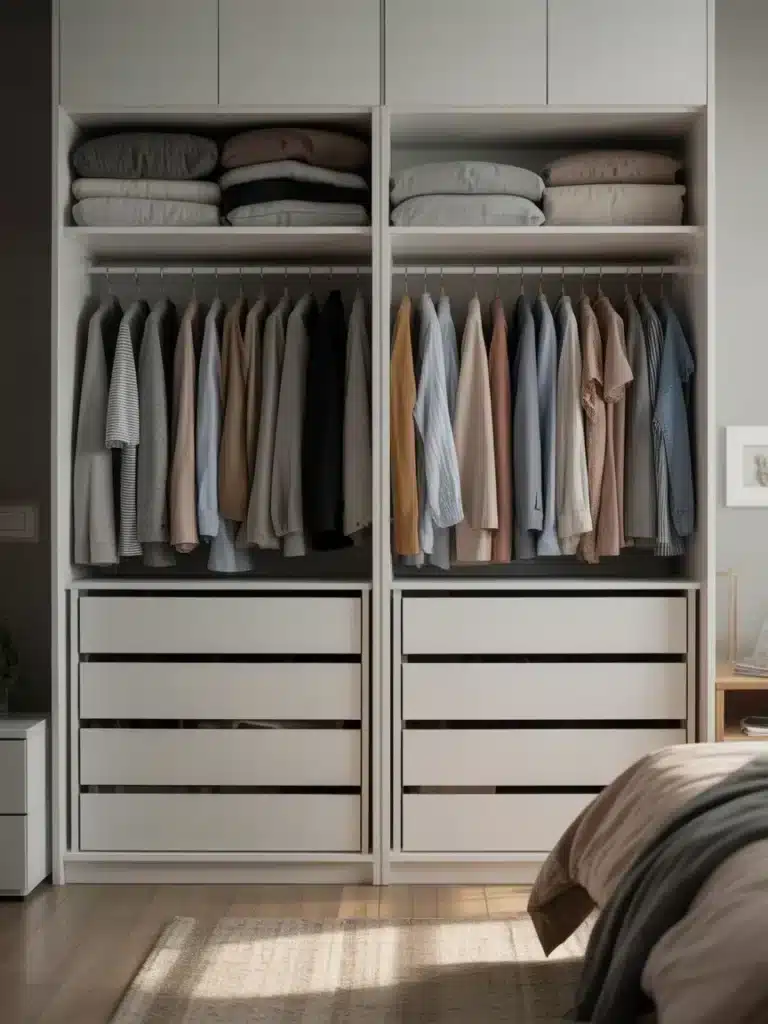
The paired hanging sections, drawers, and folded stacks create a readable arrangement: larger categories stay visible, while smaller pieces have contained storage below. That is a useful starting principle even if your PAX has only one frame.
Assign each section a purpose before deciding how many shelves or drawers to add. You should be able to describe a bay as “work clothes” or “short hanging and everyday drawers” without listing a dozen unrelated uses.
Keep the most-used categories within your comfortable reach, whether you access the wardrobe standing or seated. Store garments where they can be removed individually, and leave enough space to return clean laundry without compressing everything. The measure of a working layout is simple: you can find an item, take it out, and put it back without disturbing the neighboring categories.
Empty One Bay and Sort What Needs to Go Back

Laying clothes out beside the wardrobe makes the storage requirement visible. Work on one bay if emptying the entire closet would leave more than you can finish. Put clean garments on a clean surface, keep shoes separate, and wipe the empty compartment using the care instructions for its finish. Let surfaces dry before loading them again.
Sort by the next action: return to the wardrobe, wash or repair, pass on, or review later. A formal outfit or sentimental item does not need to leave simply because it is rarely worn.
Give those pieces a deliberate place or a labeled review container instead of mixing them back into everyday clothes. Keep items leaving the wardrobe separate so they do not migrate into an empty drawer while you work.
Turn the Sort Into a Storage Inventory

The decluttering sequence is a prompt to make decisions before buying containers. Once the first sort is complete, separate what remains into useful categories: short hanging, long hanging, foldable clothes, underwear, footwear, bags, and smaller accessories.
Add categories for your own routine, such as uniforms, sportswear, or clothing shared between homes. Stop before the labels become more detailed than you want to maintain.
For each category, note the amount, storage method, and frequency of use. Hang a long garment on the hanger you intend to use and check its full drop. Measure a typical folded stack rather than guessing from an empty shelf. These observations tell you whether a gap needs another shelf, a container, or a completely different use. Do not buy an insert to solve a problem that sorting has already removed.
Choose KOMPLEMENT Fittings by the Item They Hold

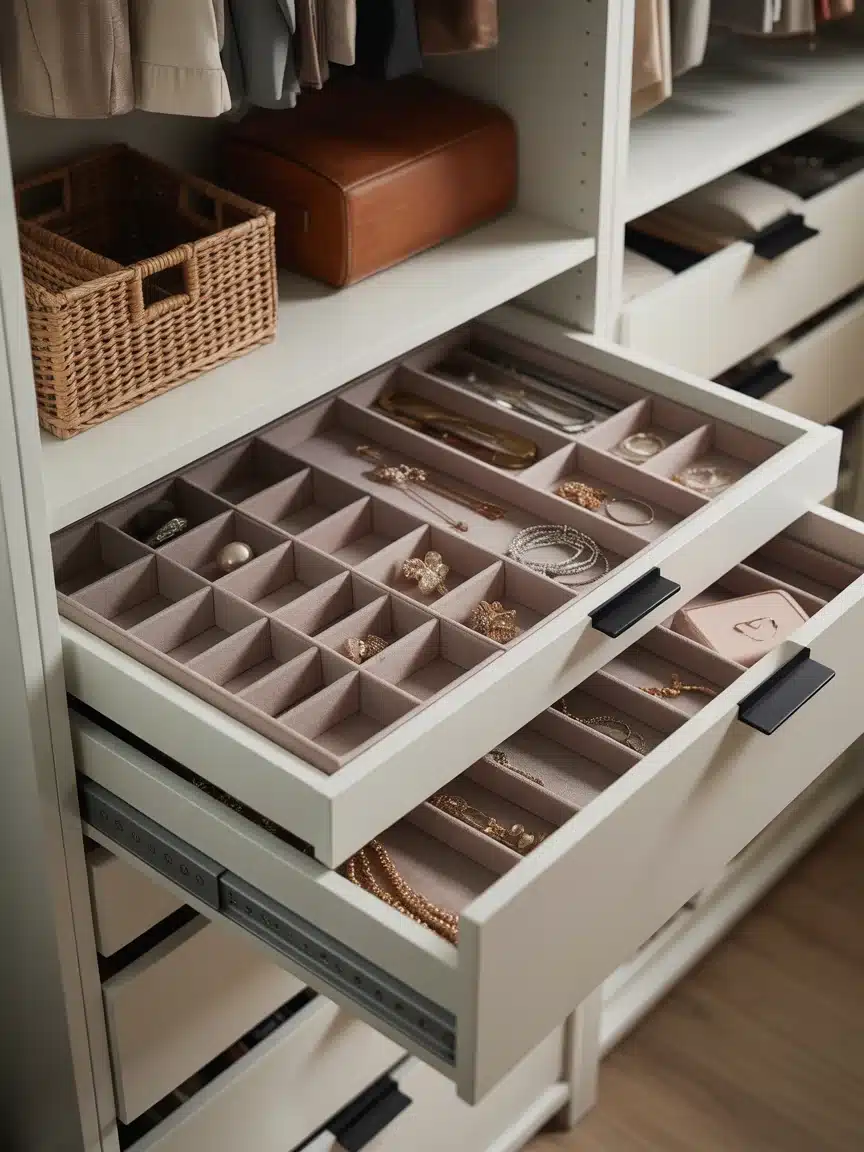
A shallow tray with divided compartments gives small accessories a visible place, while larger storage remains available above and below. That arrangement is useful for objects that disappear in a deep drawer.
It does not mean every category needs a specialist fitting. Begin with the things that repeatedly get tangled, buried, or crushed, and choose the simplest organizer that addresses that problem.
Match each fitting to the exact frame width and depth. IKEA’s KOMPLEMENT pull-out tray page specifies which PAX frame the selected version fits; the tray’s own width differs from the frame size used to select it. Check door and hinge clearances, the opening needed to use a pull-out, and the listed load. Save the article number with your plan instead of relying on the product name alone.
Compare Drawers, Trays, Shelves, and Boxes

Drawers, trays, shoe storage, and dividers solve different problems. Choose between them by how you want to retrieve the contents. A drawer contains loose clothing; a shallow tray makes small items easier to scan. A shelf gives flexibility for folded stacks or boxes, but it needs enough clearance to lift those items out. Dividers help only when the resulting compartments suit what you own.
Check the inside dimensions of a drawer before choosing loose inserts. The SKUBB range includes different box and organizer formats, so a shared series name does not mean every version fits the same opening. Try one arrangement before buying multiples. If you already have suitable containers, use them to test the category layout before replacing them for appearance.
| Storage choice | Useful for | Check in everyday use |
|---|---|---|
| Drawer | Underwear, T-shirts, sportswear, and small folded garments | You can see the rows and close it without pressing on the contents. |
| Pull-out tray | Belts, watches, jewelry, or accessories with suitable inserts | The full tray is accessible and the compartments fit the objects. |
| Open shelf | Folded stacks, bags, or removable boxes | The pile stays stable and there is room to lift items out. |
| Box or storage case | Grouped occasional items and suitable seasonal clothing | It fits the opening and can be retrieved without unloading the shelf. |
| Hanging section | Garments suited to hangers | The hem clears whatever is underneath and clothes can be removed individually. |
Fold for Visibility and Hang for the Space You Have

The combination of hanging clothes, divided drawers, and lower shoe shelves separates storage by how each item is used. Keep that distinction when planning your own bay. Fold garments that suit folding into a shape that fits the drawer, and reserve hanging space for items you prefer to store that way. Garment care instructions and fabric behavior matter more than making every category follow one method.
For sturdy T-shirts, a file-style row can reveal more options than a flat pile. For bulky or delicate knitwear, a short, loose stack may work better than forcing the garment upright. In the hanging section, group by garment type and length first, then use color order if it helps you choose. Keep the bottom of long garments clear; storage below them is available only when it does not crowd or crease the clothes.
Adapt a T-Shirt Fold to Your Drawer
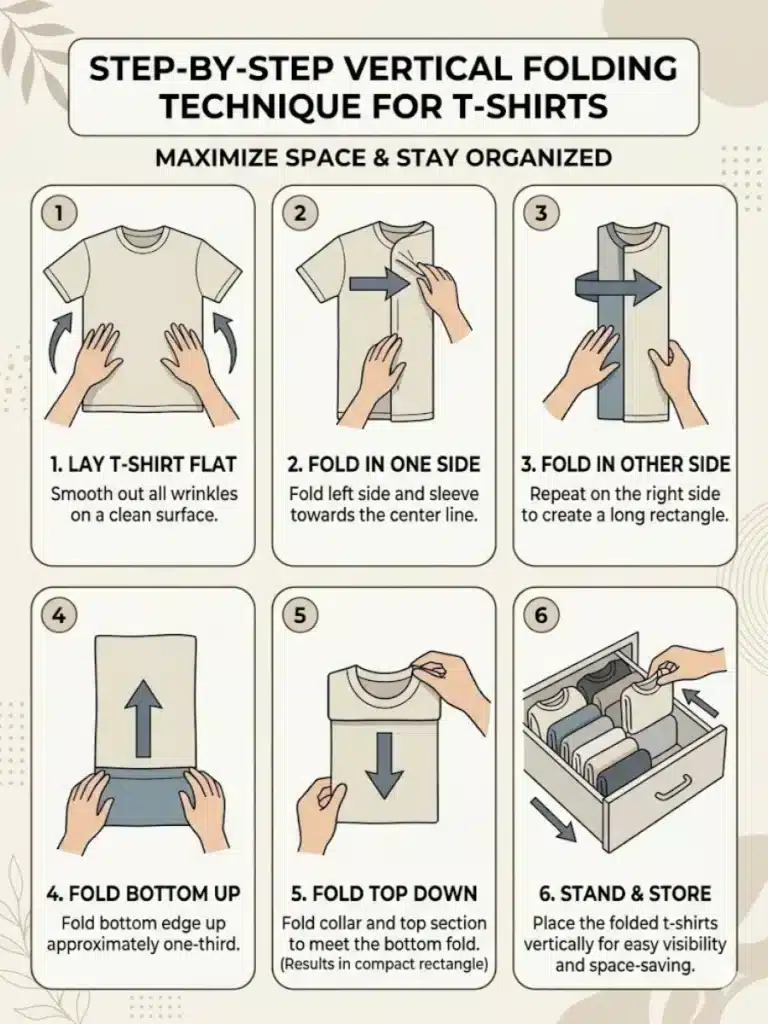
A vertical fold works when the final packet fits the drawer and remains easy to remove. Start with one T-shirt and test the result before folding the whole category. Adjust the fold to the usable drawer height and depth, including clearance beneath the drawer above. There is no benefit in creating a precise row that catches every time the drawer closes.
- Lay the T-shirt flat and smooth it gently.
- Fold the sides and sleeves inward to form a narrower rectangle.
- Fold along the length in sections until the packet fits your drawer.
- Stand the folded shirts in a row with room to lift one out.
- Use a suitable divider or small box if a partly empty row keeps collapsing.
Keep the fold relaxed enough that putting laundry away is repeatable. If a garment constantly springs open or becomes tightly compressed, change its fold or storage position rather than treating it as a failure to organize correctly.
Build Zones Around Your Routine, Not Just Your Clothes

The mix of hanging lengths, central accessory storage, and lower footwear shows how several functions can share a wardrobe without becoming one large category. In your PAX, place the clothing and accessories used together near one another when possible. Work shirts can sit near the trousers or belts worn with them, while sportswear may be easier to manage in a separate drawer.
For a shared wardrobe, give each person a clear area before dividing by item type. For one person, make the easiest positions match the current routine, with a separate place for occasional wear.
Eye level is not automatically the best position for everyone: use the reach range that lets you retrieve items comfortably. Avoid putting daily-use storage behind another category that must be moved first.
A Sample Layout for Two Different Storage Needs
Use this as a way to assign functions, not a specification for particular frame sizes or fitting positions. Confirm the exact components and clearances in your own PAX before moving rails or installing drawers.
| Area | If you wear mostly short hanging garments | If you need long hanging and more folded storage |
|---|---|---|
| Primary hanging bay | Group shirts and short jackets with space to move hangers | Reserve an unobstructed drop for long garments. |
| Accessible drawer area | Keep underwear, socks, and frequently used accessories together | Use visible rows for foldable everyday clothing. |
| Shelf area | Store useful boxes or a small number of folded stacks | Create short, stable stacks with access above each one. |
| Upper area | Place lighter occasional items in labeled containers | Store suitable seasonal pieces without compressing delicate clothing. |
| Footwear area | Group current-use pairs where they are easy to reach | Allow for taller footwear rather than repeating identical gaps. |
Use Upper Shelves Without Creating Unreachable Storage
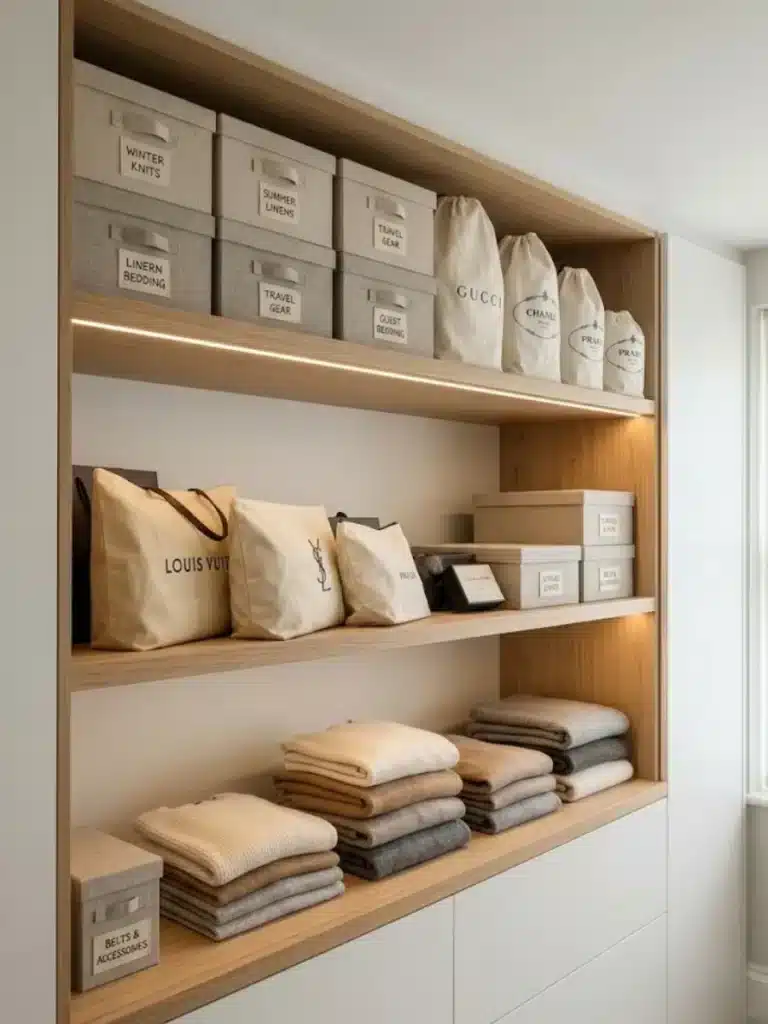
Labeled containers on upper shelves turn occasional storage into something you can identify from below. Keep labels facing the opening and use categories broad enough to remember, such as “holiday clothing” or “spare bags.” A container that looks tidy but needs three other boxes removed before it can be reached is likely to become forgotten storage.
Put lighter, less-used items higher up only when you have a suitable way to retrieve them. Keep heavy or awkward containers in easier positions, while following every component’s specified load.
Lower placement does not make an overloaded shelf safe. KOMPLEMENT shelf listings include model-specific load information; check the exact size you own rather than applying one figure across the range. Do not climb drawers or shelves to reach the top.
Put Light Where Clothes Hide It

Interior lighting is most useful when it reaches the contents of the wardrobe, including shelves below a rail and the front of hanging garments. A ceiling light behind your shoulders can leave those areas in shadow. Open the doors, stand where you normally choose an outfit, and identify the dark spots before deciding where an additional light belongs.
Choose lighting intended for the location and follow its installation and clearance instructions. ÖVERSIDAN is one PAX lighting option; verify the exact strip, required power components, and controls together.
Keep cables out of drawer and hinge paths, and test the result with clothes in place. Warm color alone does not guarantee useful visibility or accurate color comparison, so check garments in ordinary room light as well.
Give Small Accessories a Shallow, Reachable Home
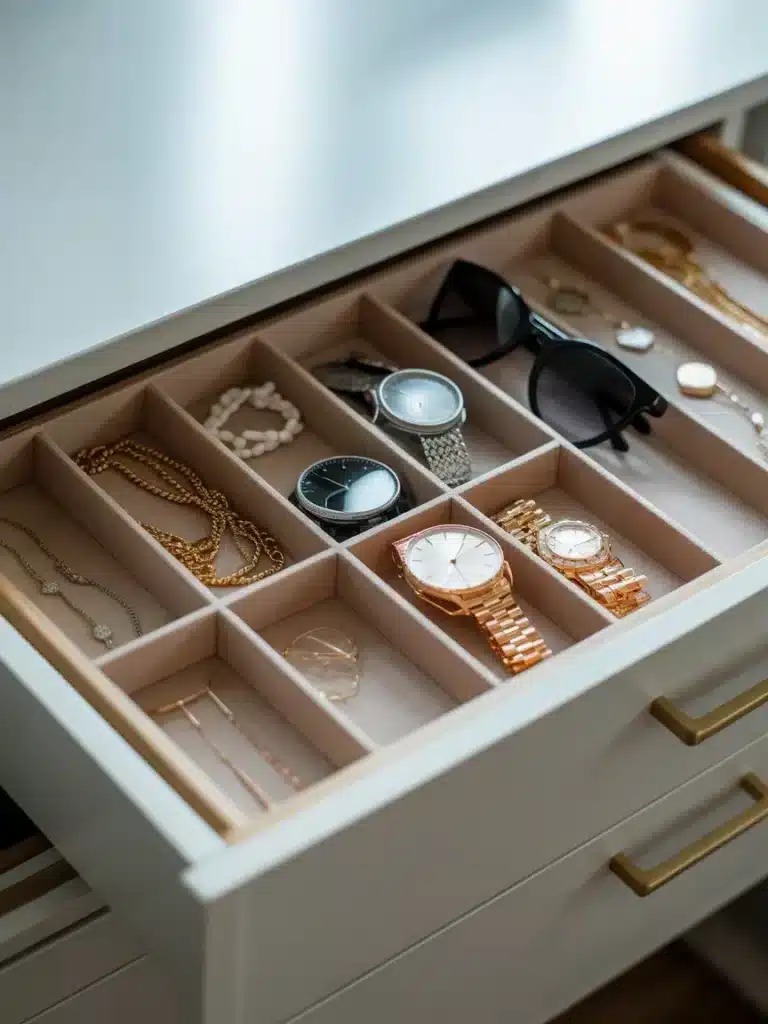
The divided drawer keeps watches, glasses, and jewelry separated in a single visible layer. Copy the principle by fitting the compartments to your actual objects. Long necklaces need a different shape from watches or rings, and sunglasses should not be wedged into a space chosen only because it completes a grid. Keep the items used most often nearest the easy-to-reach part of the drawer.
Leave yourself a small landing area for an accessory removed at the end of the day, then return it to its section during the next reset. If you prefer hanging belts or scarves, use a compatible organizer rather than adding unplanned screws to wardrobe panels. Keep delicate pieces in appropriate individual storage when needed. Visibility is helpful, but protection and easy handling matter more than displaying everything at once.
Rotate for Your Climate and Calendar

A row of labeled boxes above current-use hanging clothes makes seasonal storage easy to distinguish from everyday storage. Rotate when the contents stop matching your weather or activities, rather than following a fixed month. Someone who travels between climates may need a small accessible travel group even when those garments are out of season at home.
Before moving clothes into longer-term storage, check their care requirements, clean as appropriate, and make sure they are dry. Keep container labels specific enough to retrieve a useful group, such as “cold-weather layers” or “occasion shoes.” Leave some transitional clothing accessible. A seasonal reset should reduce searching, not require you to unpack a large box whenever the weather changes for a day.
Make the Swap Before Adding More Storage

The rotation sequence is a useful checkpoint: decide what leaves the active section before filling it with the incoming category. Inspect stored items while they are out, separate any repairs, and check that the box still has a clear purpose. This is also the time to notice whether a container is too heavy or difficult to handle in its assigned position.
Bring the next group into the easiest positions and adjust only the compatible shelves or fittings that need to move. Write the new contents on the container before returning it to storage.
If no seasonal rotation is needed, use the same process for changing work routines, sports, travel, or a child’s clothing size. The organizing method should follow your life rather than create another calendar task.
Create a Reset That Fits Laundry Day

A wardrobe stays easier to use when the reset happens alongside a task you already do. When putting clean laundry away, return displaced items to their categories, check the drawer that tends to overflow, and clear garments waiting for repair or another decision. A short repeatable sequence is more useful than a long checklist that you regularly postpone.
- Return: Put clean, wearable clothes back in their assigned groups.
- Separate: Keep laundry and repair items out of clean storage.
- Clear: Remove temporary bags or objects blocking a drawer or hanging section.
- Adjust: Change one category or fold that repeatedly makes putting clothes away difficult.
Leave enough spare room that normal laundry can return without forcing it in. If a section only works when some clothes are waiting to be washed, the layout needs more capacity for that category or fewer items assigned to it. The answer may be a shelf change or a different storage method, rather than more frequent tidying.
Fix the Layout Behind Recurring Mess

Falling stacks, mixed drawers, and cramped rails usually point to a specific mismatch between the storage and its contents. Start with the problem you encounter most often. If a pile collapses when a shirt is removed, reduce its height or try a drawer row. If a small accessory disappears, give it a shallow contained section rather than clearing the entire wardrobe again.
Avoid treating a new insert as the first answer to every problem. Test a simpler category, a different fold, or a changed position before buying.
Different hanger shapes can serve different garments, so matching them is a visual choice rather than a requirement. Keep useful specialist hangers where they support the clothing properly, and follow care guidance for delicate garments.
Troubleshoot One Problem at a Time
| What keeps happening | What to check | A change worth testing |
|---|---|---|
| Folded stacks collapse | Pile height and whether the lower items are used frequently | Shorter stacks, a suitable divider, or drawer storage. |
| A drawer will not close easily | Overfilled contents, fabric catching, or a mechanical obstruction | Remove excess contents and check the fitting before forcing it shut. |
| Hanging clothes cover lower storage | Actual garment length on the chosen hanger | Move the lower category or revise the compatible rail arrangement. |
| Seasonal boxes stay unopened | Unclear labels, awkward weight, or difficult access | Smaller useful categories and an easier retrieval position. |
| Accessories collect outside the wardrobe | Their assigned home is too distant or awkward | A shallower, reachable section near the point of use. |
Keep the Final Arrangement Simple Enough to Use

The restrained open section leaves hanging clothes easy to scan, drawers accessible, and only a few larger pieces on the upper shelf. Use that clarity as the finishing test. You do not need decorative objects in every gap, and a practical container can provide the repeated color or texture that makes the wardrobe look coordinated. Keep everyday categories readable before adding styling details.
Try a normal morning and a full load of clean laundry before declaring the arrangement finished. Check whether you can choose clothes, return hangers, open each drawer, and put everything away without moving another category first. Keep the parts that work and change the one that creates friction. An organized PAX earns its place through easy use, even when its contents do not look perfectly arranged.

